Vivianite – 21
SOLD

https://www.mindat.org/mesg-32297.html
Vivianites darken when ferrous iron in their structure oxidizes to ferric iron, a reaction stimulated by light. The oxidation occurs by loss of protons (hydrogen ions), which diffuse out of the structure; atmospheric oxygen has no effect on this process, so laquering or keeping it in an oxygen-free environment won’t help at all.
Last summer while talking to John Betts, he mentioned that vivianite turns dark almost instantly upon exposure to daylight. He said he has seen film of the reaction, and that once they have completed that initial darkening, in 10 minutes or so, they do not continue to darken at all.
Oxidation occurs when an atom, molecule, or ion loses one or more electrons in a chemical reaction. When oxidation occurs, the oxidation state of the chemical species increases. Oxidation doesn’t necessarily involve oxygen!
https://homework.study.com/explanation/oxidation-cannot-occur-without-a-oxygen-b-water-c-reduction-d-air-e-acid.html
Oxidation and reduction reactions cannot occur without the other. Oxidation is the process where electron-rich chemical species give off electrons. These electrons are then accepted by the electron-deficient chemical species in the reduction half-reaction. Collectively, these reactions are called oxidation-reduction reactions or redox reactions
https://nilacolori.com/vivianite-a-rare-blue-pigment/?lang=en#:~:text=In%20fact%2C%20vivianite%20crystals%20appear,water%20from%20the%20crystalline%20lattice.
In fact, vivianite crystals appear colorless when they are found in the fields and they turn into blue only when they are exposed to light. This process occurs when the mineral, ferrous sulphate hydrate with the formula Fe2+3 (PO4)2 (H2O)8, oxidizes and loses some water from the crystalline lattice. When photons, the fundamentals particles of light, enter in a transparent crystal of vivianite, they can cause the expulsion of a hydrogen atom from one of the eight water molecules. In this way, a hydroxyl ion with a negative charge is formed.
Vivianite, blue pigmentSince charges have to always be balanced, the extra negative charge is compensated with a change in the oxidation state of the iron from Fe2+ to Fe3+. Thus, this leads to a progressive change in the crystals’ color.
Showing all 10 results
SOLD
Available for $85 USD plus shipping
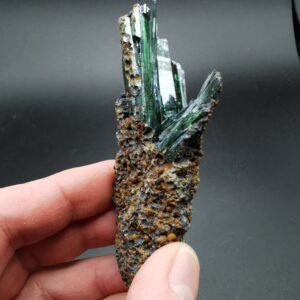
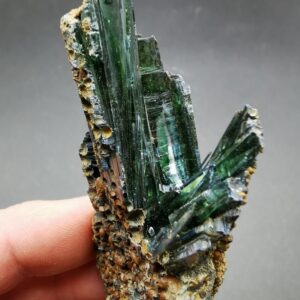
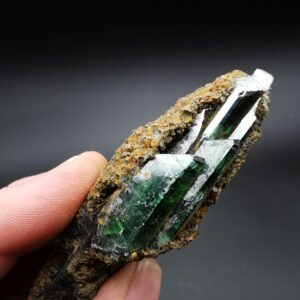
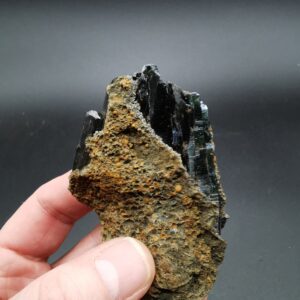
Vivianite is a beautiful mineral usually found as deep blue to deep bluish-green prismatic to flattened crystals. This specimen is from the Amazon.
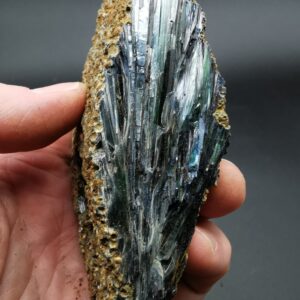
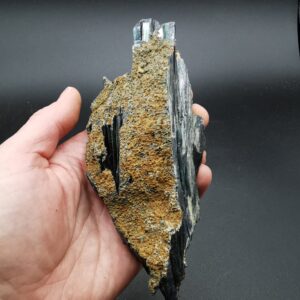
Available for $95 USD plus shipping
Vivianite is a beautiful mineral usually found as deep blue to deep bluish-green prismatic to flattened crystals. This specimen is from the Amazon.
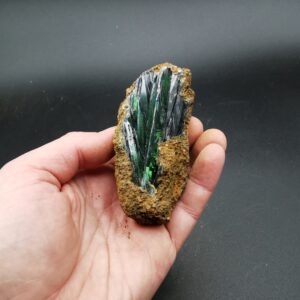
Vivianite is a beautiful mineral usually found as deep blue to deep bluish-green prismatic to flattened crystals. This specimen is from the Amazon.
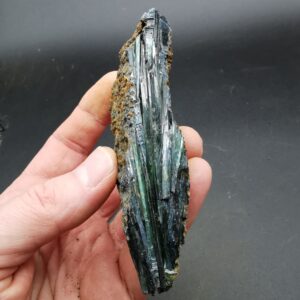
Vivianite is a beautiful mineral usually found as deep blue to deep bluish-green prismatic to flattened crystals. This specimen is from the Amazon.
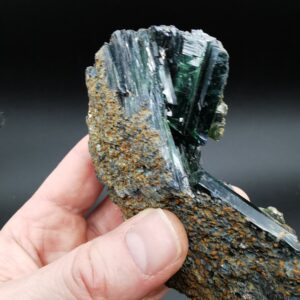
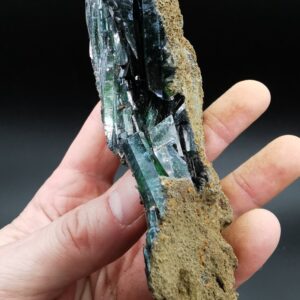
Vivianite is a beautiful mineral usually found as deep blue to deep bluish-green prismatic to flattened crystals. This specimen is from the Amazon.
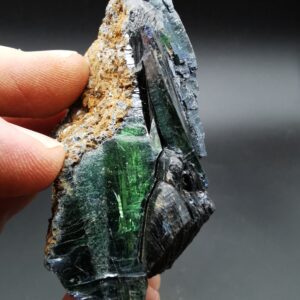
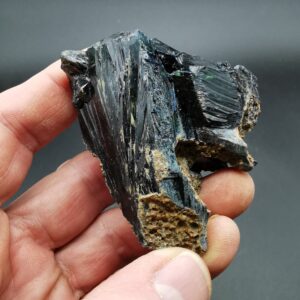
Vivianite is a beautiful mineral usually found as deep blue to deep bluish-green prismatic to flattened crystals. This specimen is from the Amazon.
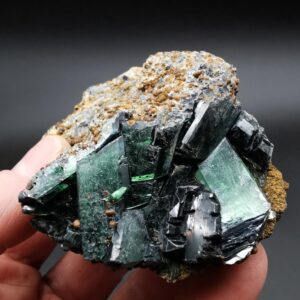
Vivianite is a beautiful mineral usually found as deep blue to deep bluish-green prismatic to flattened crystals. This specimen is from the Amazon.
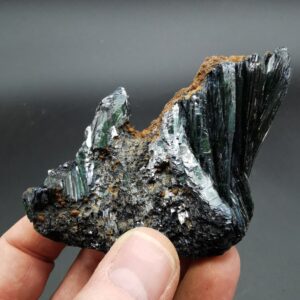
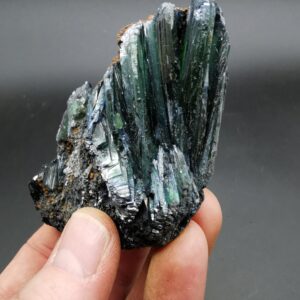
Vivianite is a beautiful mineral usually found as deep blue to deep bluish-green prismatic to flattened crystals. This specimen is from the Amazon.
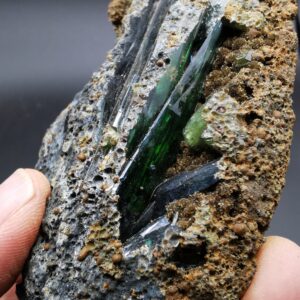
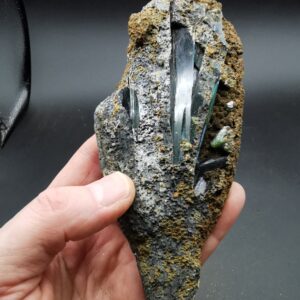
Vivianite is a beautiful mineral usually found as deep blue to deep bluish-green prismatic to flattened crystals. This specimen is from the Amazon.
No products in the cart.